The Biscuit Tin of Paperwork: What a House Still Keeps on Its Own Behalf
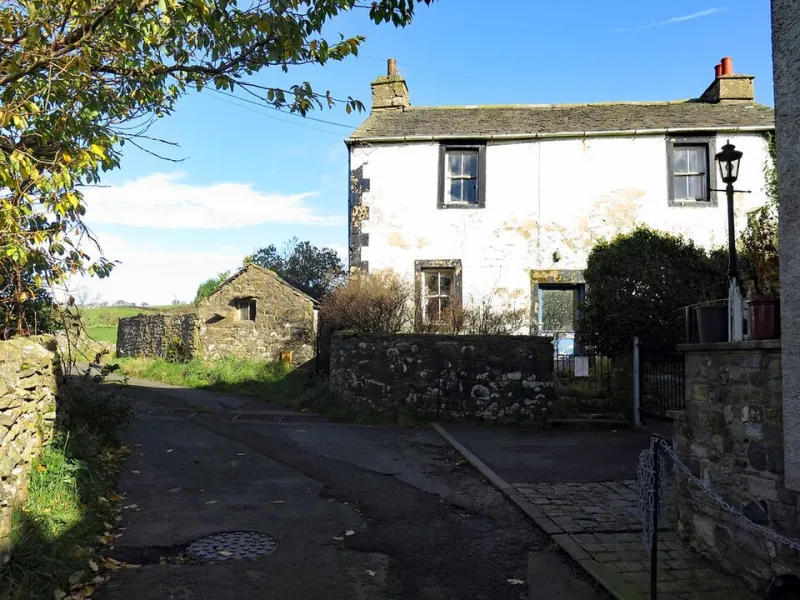
Photo: Andrew Curtis , CC BY-SA 2.0, via Wikimedia Commons
It is one of the more reliable pleasures of this trade. Somewhere in the back of a cupboard, behind the paint tins and the deckchair nobody has unfolded since 1998, there is a tin. Sometimes it is a biscuit tin, sometimes a shoebox, once — memorably — a leather writing case. Inside is the house's own archive: folded deeds, a bundle of letters, a guarantee for a damp course laid a generation ago, a hand-drawn plan with a boundary marked in Biro and initialled by two neighbours long since moved away.
Sellers tend to regard this as clutter and apologise for it. They should not. We have been in the business since 1892, and we would rather see that tin than almost anything else in the house.
What Survives, and Why
Paper survives because nobody could think of a reason to throw it away. Deeds were once valuable instruments, kept in the bank and produced like credentials. Guarantees were kept because a guarantee is a promise and promises are hard to discard. Notes between owners were kept because they were personal, and because the person who wrote them was, at the time, a neighbour.
Since the arrival of compulsory registration, title is proved by the register rather than by the deed itself. This has led many people to assume that the old papers are now decorative. They are not. What the register records is ownership. What the tin records is everything the register has no room for: how the house has behaved, what was done to it, and what the people who lived here thought was worth writing down.
The Documents Worth Knowing
The Conveyance or Deed of Gift
Even where title is registered, an old conveyance often describes the property in the language of an earlier age — with a plan, a schedule of boundaries, and sometimes a reference to a right of way across a yard that nobody currently exercises but nobody has extinguished either. Read the description carefully. It will tell you what the house was when it was first carved out, which is frequently not what it is now.
Covenants and Conditions
Restrictive covenants frequently survive long after the estate that imposed them has been sold off piecemeal. A clause forbidding trade from the premises, or requiring a fence of a certain height, or prohibiting outbuildings, may still be enforceable, or may be so ancient and so poorly drafted that its effect is arguable. Either way, the buyer's solicitor needs to see it, and the seller who produces it early saves a fortnight of correspondence.
Guarantees, Certificates and Warranties
Timber treatment, damp-proof courses, roof work, cavity wall insulation, electrical certificates, boiler installations: a guarantee that has been transferred between owners and kept safely is a small piece of comfort. Check the dates and check the terms. A thirty-year guarantee issued in 1979 is not worth the paper it is written on; a ten-year guarantee on a roof replaced six years ago is worth rather more than the vendor suspects.
Receipts and Handwritten Notes
These are the humblest items in the tin and, in our view, the most revealing. A receipted invoice for slating work in 1954 tells you the roof has been cared for over a long period, not merely patched before sale. A note from a previous owner explaining which stopcock controls what, or that the third stair creaks by design, is worth more to a new occupant than any number of laminated instructions left in a kitchen drawer.
Gathering It Sensibly
Our advice is always the same, and it takes an hour.
- Empty the tin, the folder and the drawer onto a table in good light.
- Separate into three piles: title and legal, works and guarantees, and personal and historical.
- Photograph every page, in order, with the camera held flat and the documents unstacked. Poor light and overlapping corners are the two reasons photographs prove useless later.
- Make a one-page inventory — date, description, one line of comment. This sheet will be read by more people than any other document in the file.
- Hand the originals to your solicitor at the outset, not to the agent at the eleventh hour.
The single most common fault we see is the tin produced on the morning of exchange, when there is no longer time to read it, let alone ask a question of it.
What the Paper Proves at a Sale
It proves three things, in ascending order of importance. It proves the seller has nothing to hide. It proves the property has a history of being maintained rather than merely marketed. And it proves that this house has been someone's home over a long period, with the ordinary accumulation of care that implies. Buyers respond to all three, often without being able to say why.
What It Cannot Prove
An archive is not a survey. It tells you what was done, rarely how well. It cannot confirm that the extension built in 1987 complied with the regulations of the day, nor that the wiring has been touched since. Nor should a gap in the papers be read as evidence of concealment; most houses of any age are missing something, and very often it was lost in a move rather than in a dispute.
We would put it this way. A survey tells you what a house is. The tin tells you what it has been. A buyer who is given both is a buyer who is far less likely to be surprised, and we have always taken the view that an unsurprised buyer is the best kind.