A Shorter Shelf, a Clearer Shop: The Case for Not Stocking Everything
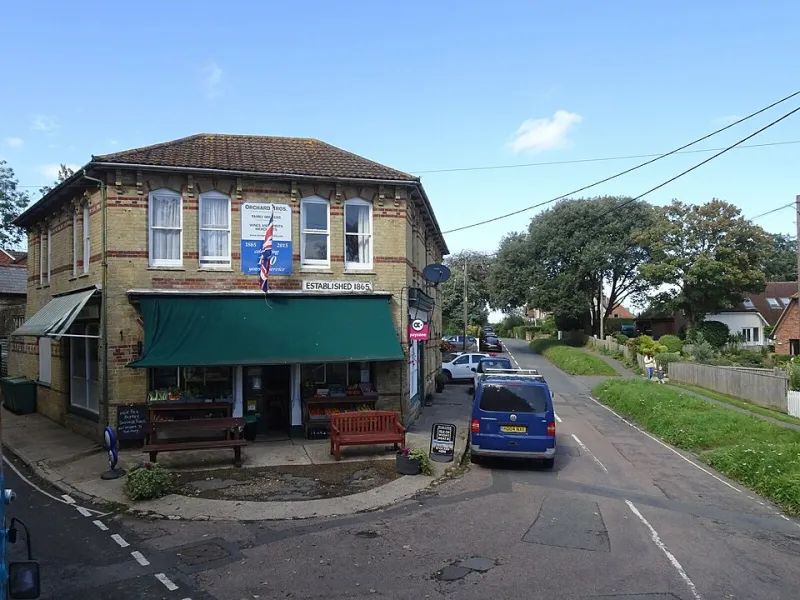
Photo: Nigel Thompson , CC BY-SA 2.0, via Wikimedia Commons
There is a fashionable idea that a good shop should stock everything. If a customer wants it, the argument goes, the shelf should provide it. The shop becomes a warehouse with a till, and the customer is invited to wander its aisles in the hope that abundance will somehow become choice.
We do not accept this. A grocer’s shelf is an argument. It tells the customer what matters, what is in season, what is worth the money and what can be trusted. A shop that stocks everything is not being generous. It is refusing to make a decision, and passing the work of editing on to the person who has least time to do it: the customer.
The Warehouse Illusion
A long aisle is not the same as a good range. Walk into a large store and you will find twelve kinds of tomato, most of them bred for travel rather than taste. You will find flour in bags that look different but behave the same. You will find seasonal food sold all year, at a quality that satisfies nobody.
This is not choice. It is noise. The customer is asked to compare products that have been engineered to be indistinguishable, and then to feel grateful for the variety. The shop has confused volume with service.
At Brookshaws & Sons, we have always taken the opposite view. A shorter shelf, carefully chosen, is easier to read. It tells you that the person who selected it has already done some of the thinking. That is what a good shop should offer: not the illusion of infinite choice, but the reality of a few good decisions.
What We Choose Not to Stock
Every shop has an unwritten list of things it will not sell. Ours has been built up over generations, and it is revised more often than customers might imagine. We do not stock cheap imports that undercut local producers while offering no real saving in quality. We do not stock trend-led lines that arrive with a great deal of noise and leave with a great deal of waste. We do not stock products that we would not be happy to put on our own tables.
This is not snobbery. It is a practical judgement about what a shop is for. A grocer is not a museum of everything that has ever been manufactured. A grocer is a filter. The customer pays us for that filter, whether they realise it or not.
Cheap Imports and False Economies
There is a place for imported food. No British shop can pretend otherwise, and a winter without citrus or coffee would be a poorer one. But there is a difference between an import that earns its place and an import that exists only to be cheap.
The cheap import is often a false economy. It may cost less at the till, but it frequently costs more in flavour, in food waste and in the slow erosion of local supply. It also teaches customers to expect a price that cannot be sustained. When the cheap line disappears, as it always does, the shelf is left emptier than before.
We would rather stock fewer imported lines and be honest about why they are there. A good olive oil, a decent coffee, a tin of tomatoes that actually tastes of tomatoes: these are imports that earn their shelf space. A pallet of cut-price novelty biscuits does not.
Trend-Led Lines and the Cost of Novelty
Every year brings a new enthusiasm. A grain, a berry, a ferment, a flavour of crisps that nobody asked for. Some of these become genuine staples. Most do not. A shop that chases every trend quickly becomes a shop that cannot be trusted, because its shelves are always changing and its customers are always guessing.
We prefer to wait. If a new line proves itself, if customers ask for it repeatedly, if it fits the way people actually cook, it may earn a place. But we do not clear a shelf for a fashion. The cost of novelty is not just the unsold stock. It is the confusion of the customer who comes in for the same flour they bought last month and finds it replaced by something in a louder packet.
Local Sourcing Is Not a Badge
Local sourcing has become a marketing badge, and like all badges it is sometimes worn without conviction. A product can be local and poor. A producer can be down the road and still not be the right person to supply a shop.
For us, local sourcing is a question of fitness. Does the producer make something good? Can they supply it reliably? Do they understand the seasons? Are they honest about what they cannot provide? If the answers are yes, we will stock them. If not, the fact that they are five miles away is not enough.
This is why our range is shorter than it could be. We would rather have one excellent local cheese than six indifferent ones. We would rather have a baker who knows the flour than a shelf of loaves that all taste of the same compromise.
The Customer’s Time
A short range respects the customer’s time. Most people do not want to spend twenty minutes comparing labels. They want to know that the shop has already done the comparison, and that the few choices on offer are all reasonable.
This is not to say that choice is unimportant. It is to say that choice should be meaningful. Two good loaves are better than twelve mediocre ones. Three kinds of apple, each with a clear use, are better than a bin of anonymous fruit. The shop’s job is to make the choice legible, not to make it endless.
Restraint as a Service
Restraint is often mistaken for limitation. In a good shop, it is the opposite. It is a service. The grocer who refuses to stock a bad line is doing the customer a favour. The grocer who refuses to chase a trend is protecting the customer from waste. The grocer who keeps the shelf short is making the weekly shop easier.
This is not an argument against variety. It is an argument against noise. A well-edited shelf can still be rich and surprising. It can still change with the seasons and the years. But it changes for a reason, not because a supplier has offered a discount or a trend has appeared on a screen.
An Empty Shelf Is Not a Gap
Customers sometimes ask why we do not stock a particular item. The honest answer is often that we have not found one good enough. An empty space on the shelf is not always a failure. Sometimes it is a decision.
We would rather leave a gap than fill it with something we cannot stand behind. That is the quiet discipline of a shop that has been in the same family since 1892. The shelf is not a warehouse. It is a promise, repeated every week, that what is on it has been chosen with care.