The Chime That Knows Your Name: Notes From Behind the Counter
A Small Piece of Brass With a Long Memory
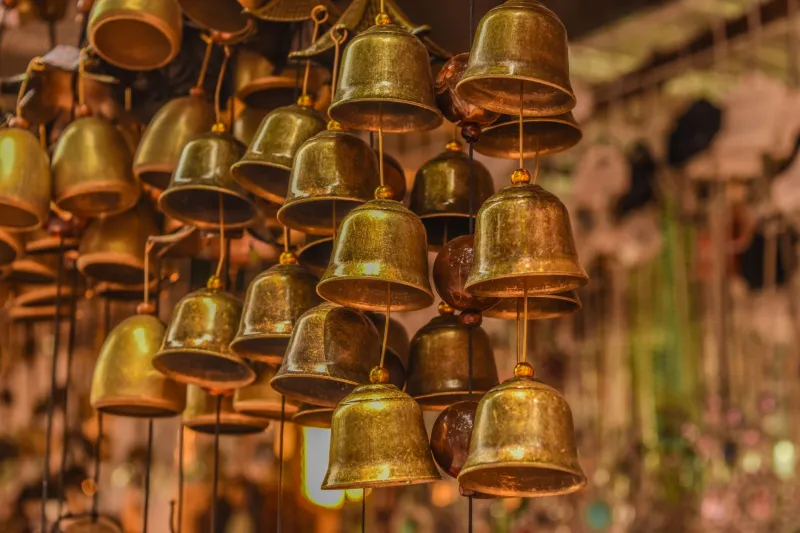
There are objects in this shop that appear in no ledger and no stock list, yet we should no sooner part with them than the counter itself. The bell above the door is one. It has hung there, we believe, since the premises were first fitted out — a modest dome of brass with a small clapper that has announced every customer, delivery man, and fleeing schoolchild for well over a century.
It is not a fine thing. It is slightly dented at the rim, and the plating has worn through on one side where generations of coats have brushed past it. But it has a tone. Not the shrill, electronic complaint of a modern door alarm, but a low, round note that carries to the back of the shop without ever seeming to shout.
Learning to Listen
Ask any of the long-serving staff and they will tell you the same thing: you learn the rings before you learn the faces. There is no magic in it, only repetition. The bell does not sound the same twice, because no two people open a door the same way.
Mrs. Aldous, who has shopped with us since her wedding in 1968, pushes the door firmly and quickly — a bright, confident ring, almost cheerful. Mr. Fenwick, who takes his paper every morning but never on a Sunday, lets the door swing back on itself, so the bell gives two softer strikes, like an afterthought. The children from the primary school, when they come in for penny sweets they can no longer buy for a penny, fling the door wide and the bell fairly sings.
Our oldest counter hand, Margaret, claims she can identify fourteen regulars by ear alone. We have never thought to test her, because we suspect she is understating it.
Why We Never Changed It
There was a moment, some years in the past, when a well-meaning supplier offered us a motion sensor and a chime unit. Free of charge, he said, as though that settled the matter. We declined, politely, and he seemed genuinely puzzled.
But here is the point, as we see it. A bell is honest in a way a sensor is not. It rings only when someone actually opens the door. It cannot be triggered by a draught, a cat, or a customer hovering undecided on the mat. And it demands something of the person entering — a hand on the door, a small effort, a moment of arrival. The shop does not simply admit you; you announce yourself.
There is a courtesy in that, an old-fashioned ceremony that suits the way we have always done business. The chime gives whoever is behind the counter a moment to look up, to straighten, to be ready. Nobody waits to be noticed here. The bell sees to that.
The Sounds a Shop Keeps
A shop that has traded in the same town since 1892 accumulates sounds the way a house accumulates smells. The bell, certainly. The creak of the third floorboard, which we have been meaning to fix since the Queen's Silver Jubilee and never shall. The particular clatter of the till drawer, different from any modern register. The hum of the old cold cabinet in the corner, which runs a half-tone flat in summer.
Regular customers do not hear these sounds; they would notice their absence. We have had callers return after twenty years away and say, standing in the doorway, that the place sounds exactly as they remembered. That is not an accident, and it is not nostalgia for its own sake. It is continuity — the quiet assurance that some things hold steady while the world outside the window rearranges itself.
A Welcome You Can Hear
We are often asked, usually by younger people passing through, what a shop like ours does that a supermarket cannot. The honest answers are many, but the first one is this: we know who has walked in before they reach the counter. The bell tells us. Sometimes it tells us to put the kettle on. Sometimes it tells us to fetch the order we set aside on Tuesday. Once, memorably, it told us to call the doctor, because Mrs. Hartley's ring was weaker than usual and Margaret's instincts were better than any alarm system.
No sensor does that. No app does that. A brass bell and a listening ear do it every day of the week, except Wednesdays, when we close for lunch — and even then, the bell rings once, for the person who locks up.
So the bell stays. It will stay as long as there is a Brookshaws behind the counter to answer it. If you are passing, give the door a push and hear it for yourself. We shall know it is you before you have said a word — or at the very least, we shall be glad to find out.