Honest to the Ounce: What a Brass Weight and a Steel Tape Have in Common
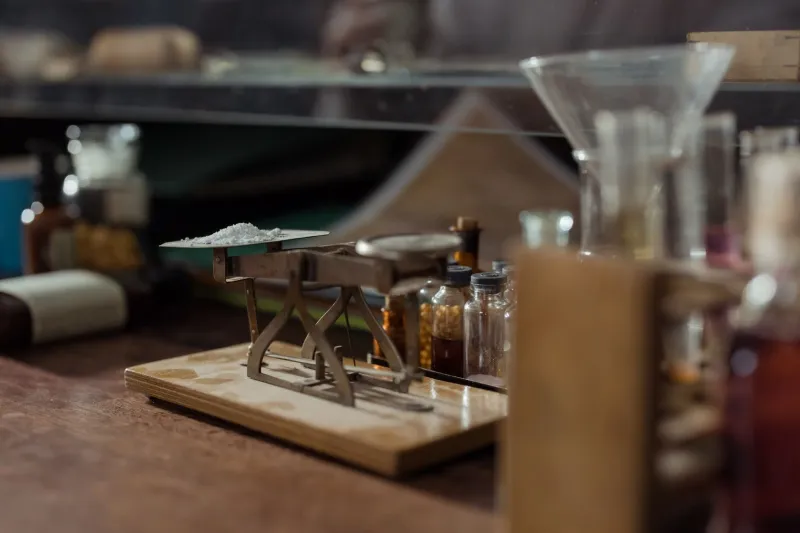
There is a set of brass weights in a velvet-lined box behind our counter that predates the electric light above it. They are stamped, verified and still used — not out of stubbornness, but because every so often a customer asks for exactly half a pound of butter, cut while they watch, and there is no argument quite so convincing as a weight they can see.
We have traded on that sight for over a hundred and thirty years. Not on slogans, not on loyalty cards, but on the simple, verifiable act of giving good measure.
The First Transaction Is a Measurement
Consider what actually happens when a customer steps up to the counter. Before a single word is exchanged, there is a measurement taking place. Cheese is cut, weighed, adjusted. A few grams over, and the assistant waves the difference away with a smile; a few under, and another sliver is added without being asked. The customer watches all of it. This watching is the point.
Trade weights in Britain have been subject to inspection since long before our founding in 1892 — the assize of bread and ale goes back to the thirteenth century, and the old county inspectors with their stamped seals were a familiar feature of market towns well into living memory. The law required honest weights. But the law only sets a floor. What it cannot require is the habit of generosity at the margins — the extra rasher, the roundly generous scoop, the hesitation before writing a figure that might flatter.
That habit is not written down anywhere. It is simply passed on, as it was passed to me on my first Saturday behind the counter: never let them see you short.
The Same Principle, Four Feet Off the Ground
You might think a firm that also sells houses has left the weighing pan behind. We would say the opposite. When one of our valuers walks through a property, the tape measure comes out of the coat pocket with the same ceremony as the brass weights come out of their box.
Room dimensions in an estate agent's brochure are, in the end, a form of weight. They can be rounded generously, measured at the widest point and quietly ignored where the chimney breast juts, or they can be taken properly — skirting to skirting, into the recesses, the awkward numbers included. Every surveyor and every buyer with a tape of their own knows the difference within a fortnight of moving in.
A house described as twelve feet by eleven had better be twelve feet by eleven, or the firm that said so will hear about it at the school gates, the golf club and the till of our shop, often in the same afternoon. In a town our size, an inflated measurement is not a private fiction. It is a public one.
Why Small Fairnesses Compound
There is a temptation, in modern business, to treat trust as a marketing asset — something to be claimed in a mission statement. We would suggest it is closer to a balance that is settled daily, in sums too small to notice individually.
The half-ounce over on the bacon. The honest dimension on the floorplan. The bill that comes to £14.80 written as £14.80, not 'about fifteen quid' waved through. None of these appears in an annual report. Together, over a century, they are the entire reason a firm like ours still has a counter to stand behind.
Economists call it reputational capital. Our grandmothers called it 'not being had'. The second phrase is better, because it describes the transaction from the customer's side, which is the only side that ultimately matters.
The Motto We Never Painted on the Wall
Plenty of family firms of our vintage have a Latin motto somewhere — carved over a door, embroidered on a presentment, printed on the old delivery vans. We never did. If we had, it would surely have been two words long: fair weight.
It covers everything we do. It covers the scales, the tape, the valuation, the bill, and the advice we give a young couple about the house they cannot really afford. It covers the promise that what you are told is what you are getting, measured in front of you, with nothing hidden in the pan.
The brass weights will outlast all of us, and one day somebody will take them out of the box for a customer who asks. That somebody will add the extra sliver without being asked, because that is how it is done here. The measure, in every sense, continues.