A Promise Given Before Breakfast: The Case for Doing Business the Old Way
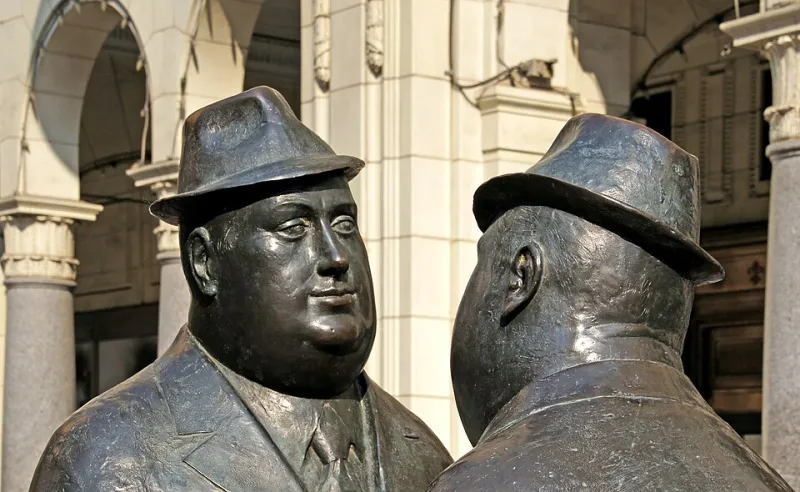
Photo: Bernard Spragg. NZ from Christchurch, New Zealand, CC0, via Wikimedia Commons
There is a ledger in our back office, dated 1904, in which a certain Mrs Ellen Whitaker of the top end of town is recorded as having taken delivery of a fortnight's provisions 'on her word'. No deposit. No signature. Her word, entered in the same copperplate hand as every other transaction that season.
We mention this not out of nostalgia, but because it raises a question we are asked more often than you might expect: does any of this still matter? In an age when a purchase can be completed on a telephone before the kettle has boiled, and when a stranger's opinion of us is available to the entire county in the form of an online review, is there genuinely a place for the handshake, the remembered name, the promise given before breakfast and honoured by lunch?
We believe there is — and we would like to explain why.
What a Handshake Actually Costs
The modern transaction is designed to be frictionless, and frictionlessness is a genuine achievement. But consider what is quietly removed along the way. An app does not notice that you have come in looking pale. A confirmation email does not pause at the door to ask after your mother. A five-star rating records satisfaction; it does not create accountability in any direction that matters.
A handshake, by contrast, is expensive. It binds the giver. When old Mr Brookshaw the third — 'Mr Gerald' to everyone from the postman to the vicar — agreed to hold a house off the market for a week while a young couple sorted their finances, he did so on nothing more than his word and a firm clasp in the doorway. He then had to live with that decision when a higher offer arrived the following Tuesday. He never once suggested going back on it. 'The word's gone out,' was all he said, and the matter was closed.
That is the weight of a handshake. It is not that it cannot be broken — anything can — but that breaking it costs something you cannot reclaim. A reputation, once spent, does not restock itself.
Knowing the Order Before It Is Asked
Long-serving members of our staff develop what can only be described as a professional memory. Margaret, who has worked our counters for thirty-one years, can tell you that Dr Patel takes his bacon unsmoked, that the Higgins family will want the turkey a day earlier than everyone else this year because of a christening, and that Mrs Denham on the lane prefers her delivery left in the porch since her hip worsened.
Is this efficient? Frankly, no. An algorithm would do it faster. But efficiency is not the point. What Margaret offers is a form of attention that no system can replicate: the sense of being known. Our customers regularly tell us that this is why they come, and we have come to understand that being known is not a soft, sentimental bonus. For many people — the elderly, the recently bereaved, the newly arrived in town — it is a small but genuine safeguard against loneliness.
Heritage as a Standard, Not a Slogan
We are wary of firms that wear their history like a badge. 'Established 1892' means nothing if the present-day service would embarrass the founders. The ledger, the handshake, the remembered order — these are not decorations for a marketing brochure. They are a standard of conduct, and standards are only meaningful when they are inconvenient.
It is inconvenient to honour a verbal agreement when a better offer appears. It is inconvenient to remember that a customer's husband passed away in the spring, and to choose your words with care as a result. It is inconvenient to accept the return of a joint of beef that was, on honest inspection, perfectly fine, because the customer's confidence matters more than the argument.
We do these things not because the old ways are charming, but because they are demanding. Heritage, properly understood, is not a licence to rest. It is a debt.
The Review Economy and Its Limits
Let us be fair to the online review. We read ours, we learn from them, and we are grateful for every kind word. Transparency of that sort has raised standards across the country and driven out practices that once went unchallenged.
But a review is written by a stranger for strangers. It is a public performance of opinion. What it cannot capture is the private accumulation of trust: the delivery driver who has held keys to half the houses on one street since 1998; the valuer who talks a nervous first-time buyer down from a panic on the pavement outside the property; the standing order honoured through a hard winter when it would have been easier to let it lapse.
These things leave no digital trace. They are, nonetheless, the substance of the relationship — and the substance is what endures. Apps are replaced, platforms fall out of fashion, review sites come and go. The reputation of a family firm is rebuilt or ruined one interaction at a time, across generations, and there is no app for that.
A Modest Conclusion
We do not imagine that the world will return to the customs of 1904, nor would we wish it to. We order our own stock online like everyone else, and we are glad of it.
But we would gently suggest that the handshake and the app are not enemies. The technology handles the transaction; the relationship handles everything that makes the transaction worth doing. So long as there are customers who would rather be known than processed, and staff willing to carry their names in their heads and their promises on their word, we intend to keep doing business the old way — or at least, the old way done properly.
Mrs Whitaker's account, incidentally, was settled in full, every fortnight, for thirty years. Her word was good to the end. We should like to think ours is too.