Forty Feet of Folly: What a Century of Filing Cabinets Taught Us About Hedges, Boundaries and Goodwill
Photo: Kızıl, CC BY-SA 4.0, via Wikimedia Commons
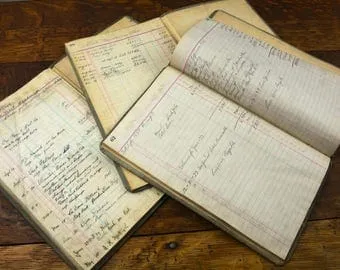
There is a drawer on the second floor of our offices that the younger members of staff call 'the quarrel cabinet'. It is nothing of the sort, of course — it is simply where the correspondence relating to boundary queries, restrictive covenants and rights of way has been filed since roughly the reign of Edward VII. But the nickname has stuck, and frankly, it is not entirely undeserved.
Among the invoices and title deeds and yellowing letters lies the record of a hedge. Not a remarkable hedge — a privet, roughly forty feet of it, running along the back boundary of two gardens on the edge of town. The disagreement it occasioned began in 1911 and was not fully resolved until 1951. Forty years. Two solicitors' firms retired in the interim. One of the original disputants is buried in the churchyard, and we suspect his successor in title took up the argument partly out of a sense of filial duty.
We tell the story not to embarrass anyone — the parties are long beyond caring, and the hedge itself was replaced by a fence in the 1970s — but because the filing cabinet is full of such tales, and each one carries a lesson that no amount of modern conveyancing software can replicate.
The Hedge That Ate a Generation
The 1911 complaint, written in a beautiful copperplate hand, concerned a privet planted by a Mr Ellery that had, by his neighbour's reckoning, crept eighteen inches over an agreed line. Eighteen inches. The correspondence runs to some ninety letters, a surveyor's report from 1923, and a proposed compromise involving a new hedge planted 'one foot within the true line, in perpetuity' — a phrase that solicitors on both sides apparently failed to notice was legally meaningless.
The dispute survived the owners, the hedge, and arguably the point. What ended it, in the end, was a burst pipe in 1951 that required both neighbours to grant each other access, at which point someone had the wisdom to suggest they settle the boundary properly, with a surveyor and a written agreement, and be done with it.
The lesson: a boundary disagreement rarely resolves itself, and it never gets cheaper with age. If something looks ambiguous when you buy — a straggling hedge, a fence that doesn't quite match the plan, a neighbour's shed that seems to have wandered — raise it before you complete, not after. An hour with a surveyor is worth a decade of letters in copperplate.
The Covenant That Outlived the Pig
Elsewhere in the drawer we find a 1928 conveyance for a house on the edge of the market square, subject to a covenant prohibiting the keeping of 'pigs, goats, or any noisome beast upon the premises'. The house has changed hands eleven times since. Every buyer's solicitor has flagged the covenant. Every buyer has asked, with varying degrees of alarm, whether they may keep a pig.
They may not. But neither, we suspect, could anybody enforce the restriction now — the character of the area changed decades ago, and the party with the benefit of the covenant cannot be traced. Still, it sits on the title like a family motto, and it must be reported with every sale.
The lesson: covenants are the ghosts of old agreements, and most are harmless — but some are not. Read them, ask about them, and take proper advice before assuming they've fallen into disuse. We have seen one or two over the years that proved very much alive and very much inconvenient.
The Gate That Was Never Ours
One of our favourites is a 1936 file concerning a right of way — a handgate across a field path that generations of townsfolk had used to reach the church. When the field was sold, the new owner locked the gate. There followed what our file describes, with admirable understatement, as 'a degree of local feeling'.
The matter went to arbitration. The outcome turned on old maps, witness statements from people who had used the path for forty years, and — we like to think — the weight of the parish's collective memory. The gate was reopened, and it remains open today, with a noticeboard beside it recording the history.
The lesson: rights of way, whether footpaths or drains or pipes running under a neighbour's land, should be established in writing wherever possible. Long use carries legal weight, but proving it later is expensive and uncertain. If you buy a property where access depends on goodwill, convert that goodwill into a deed while the goodwill is on offer.
What the Cabinet Teaches
We could fill a book with these files, and perhaps one day we shall. But the common thread is simple: property is never merely bricks and land. It is a web of understandings between neighbours, some written down and some not, and the written ones are the ones that survive.
So when our valuers walk through a house and remark, seemingly idly, on the fence line at the bottom of the garden or the old cartgate to the lane — they are not making conversation. They are reading the ground for the next chapter of a story that, in this town, goes back rather a long way.
The quarrel cabinet stays locked most days. But its lessons are open to all: check the boundaries, honour the covenants, and plant your hedge well inside the line. Your grandchildren will thank you.