One Window, Twenty-Four Mornings: A December Argument for the High Street

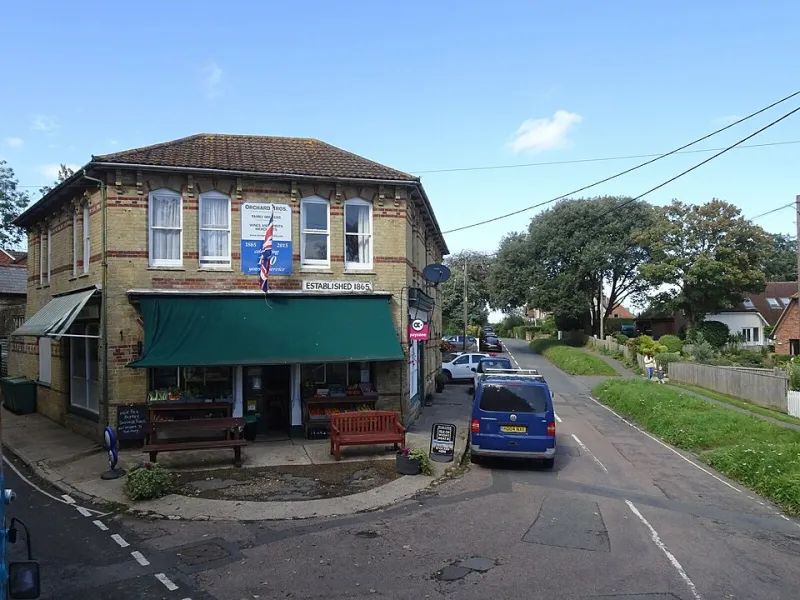
Photo: Basile Morin, CC BY-SA 4.0, via Wikimedia Commons
Advent Sunday falls on 29 November this year, and on the first of December — a Tuesday — we shall do something we have not done before. The main window of the shop will be divided, plainly and without much decoration, into twenty-four small squares. Each morning before we open, one square will be uncovered. Behind it will be a single item, a single story, or a single person from this town.
That is the whole of the idea, and we are aware of how modest it is. It is set out here because a good many people have asked what we are doing with the window this year, and because the reasoning behind it deserves a page rather than a paragraph.
The Idea, Plainly
An Advent calendar, in its older form, was not a countdown to a purchase. It was a countdown to a birth, and each door opened onto a picture rather than a prize. What we propose is a return to that: one small thing revealed each day, of no great value, but worth the walk to see.
Some squares will hold goods — the first Seville oranges, a ham that has been curing since October, a jar of something made four streets away. Some will hold stories: a photograph of this shop in the 1930s, a ledger page from 1892, a note about the year the roof came off the market hall. And some will hold introductions. A butcher, a cobbler, a bookbinder, a woman who repairs chair cane in her back room — people whose work is genuinely good and almost entirely invisible to anyone who does not already know they exist.
Why a Window Still Works
We are told, continually and with confidence, that the high street is finished; that everything now happens on a screen, that the physical shop is a museum piece, that the future is a rectangle held in the hand. We do not dispute that trade has changed. We do dispute the conclusion.
A screen can show you a thing. It cannot let you smell it, weigh it, or change your mind about it in the company of someone who knows. It cannot tell you that the person who grew the apples is standing four feet away, or that this particular cheese is at its best this week and will not be next. And it cannot, under any circumstances, give you a reason to walk past four other shopfronts on the way.
That is the real argument. A window is not a display of stock; it is a small piece of public theatre that gives a street a reason to be walked. Twenty-four of them, appearing one at a time, give a month a shape. People come back. People bring children. People stop, which is the rarest thing in a town centre at ten past nine on a wet Tuesday.
How It Is Being Done, and How It Is Not
It is being done cheaply. The squares are cut from board and painted by hand; the numbering is done with a stencil and a certain amount of disagreement about the four. There will be no competition, no loyalty card, no queue formed for a free mince pie. We have no wish to turn a window into a promotion, and we have a particular objection to the phrase 'festive experience'.
It is also being done in a fixed order, and this is the point of it. The calendar cannot be binge-viewed. Whatever is behind the eleventh square will not be revealed on the tenth, and there will be no photograph of it online until the evening. If you want to know, you will have to come. In a season when everything can be summoned instantly and forgotten instantly, a small daily inconvenience seems to us a virtue rather than a fault.
A Few Entries From Our Own List
Without giving away too much, a fair sample of what will appear during December 2026:
- 1 December — the first of the Christmas puddings, made in September, brought up from the cellar.
- 6 December — a photograph of the shop front as it was before the awning, with three members of staff whose names we can no longer be certain of.
- 12 December — a hand-drawn plan of a neighbouring property, dated 1911, showing an orchard that is now a car park.
- 18 December — a quantity of candied peel, and a recipe written out by a customer in her own hand.
- 24 December — closed until eleven, as it has been for as long as anyone can remember, and the last square opened at half past ten.
The Invitation
We are a firm that has kept a shop in this town since 1892, and we have watched more Decembers than we can usefully count. What we have learned is that the trade at Christmas is not really a trade in goods. It is a trade in company: people coming in out of the cold to be recognised, to be asked after, to be handed something over a counter rather than through a letterbox.
A window of twenty-four small squares will not save the high street, and we would not insult it by claiming so. But it costs an afternoon to build, it gives a month a rhythm, and it asks people to walk into town one more time than they otherwise would. Multiplied across a street, that is not a small thing.
Do come and look. The first square goes up on Tuesday.