The Ledger Still Sits on My Desk: Lessons From Five Generations Behind the Counter
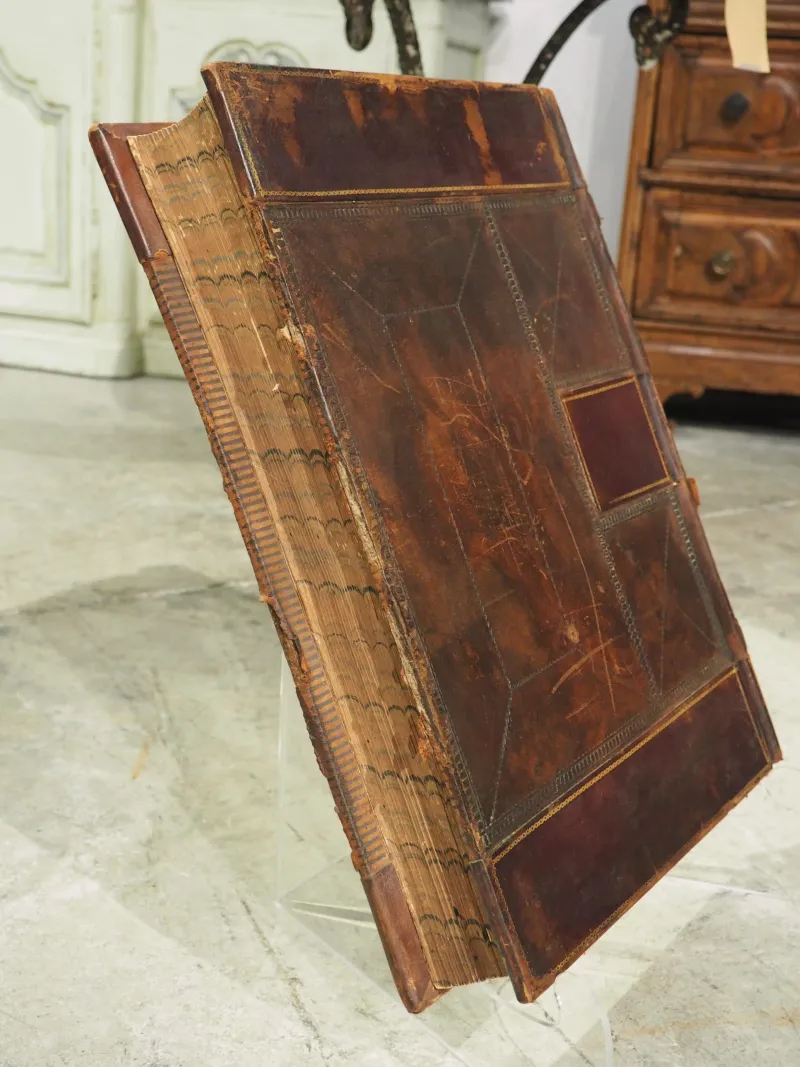
Photo: antique leather ledger book on wooden shop counter vintage, via a.1stdibscdn.com
There is a leather-bound ledger on the desk in my office, its spine cracked and its corners worn soft by hands. It dates from 1911, and it belonged to my great-grandfather, Edwin Brookshaw. In it, in a copperplate hand that no school teaches any more, are the accounts of half the households in this town: a pound of butter here, a shilling left on account there, a note beside one name reading simply, 'till after harvest'.
I keep it where I can see it. Not out of sentiment — or not only sentiment — but because it is the most honest business document I have ever read. Everything I know about running this firm is, in one way or another, written in its pages.
The First Lesson: Credit Is a Relationship, Not a Transaction
Edwin extended credit to people the banks wouldn't look at. A widowed schoolmistress, a farmhand paid quarterly, a family going through a hard winter. The ledger shows debts carried for months, sometimes forgiven entirely. A cynic would call that poor practice. Edwin understood something sharper: that the goodwill of a town cannot be invoiced, but it compounds all the same.
When my grandfather returned from the war in 1945, it was those families — or their children — who kept the shop trading through rationing and beyond. When a fire damaged the storeroom in 1968, customers arrived with ladders and paintbrushes before the insurers had even sent a letter. You do not build that kind of reserve with an advertising budget. You build it with patience, and with the occasional debt quietly written off.
The Second Lesson: Know What You Sell, and Sell Only What You Know
My father had a rule I found infuriating as a young man: never stock a line you couldn't explain to a customer in two sentences. If a customer asked which cheese would grace a wedding table, or which cut suited a slow Sunday stew, he wanted an answer, not a shrug and a shelf.
It sounds quaint in an age of algorithmic recommendations and next-day everything. But I would argue the opposite — that expertise has become the scarcest commodity in retail, and therefore the most valuable. Anyone can match a price. Not everyone can tell you why one loaf behaves differently in a damp kitchen, or why that end terrace will suit a young family better than the detached house across the road, whatever the floorplans suggest.
The Third Lesson: The Town Is the Business Plan
We have watched many fashions come through this high street. Supermarkets arrived, and we adapted. Out-of-town retail parks arrived, and we adapted again. Each time, the temptation was to chase the trend — to become something we are not, in the hope of being everything to everyone.
Edwin's ledger suggests a different strategy, one we have followed ever since: serve the town in front of you, not the market in the spreadsheet. When the mills closed, we quietly extended accounts to families we knew were struggling. When new estates went up on the old farmland, we were at the doors of the newcomers before the removal vans had left, with a loaf and a local paper. Every generation of Brookshaws has understood that our fortune rises and falls with the town's. There is no version of this business that thrives while the community around it struggles.
What I Would Tell a Young Trader Today
People sometimes ask what advice I would offer someone opening their own shop in the current climate, with online giants hollowing out the high street. I think of three things.
First, be findable in person before you are findable online. A friendly face and a remembered name will outperform any search ranking in a town this size.
Second, write everything down. Edwin's ledger survives because he recorded not just what people owed, but who they were. A business that keeps no record of its relationships will eventually have none worth recording.
Third, plan in generations, not quarters. We have made decisions in this firm — refusing a lucrative relocation, keeping a loss-making counter open, restoring the original shopfront rather than replacing it — that made no sense on any twelve-month horizon. They made perfect sense on a fifty-year one.
Still Here, Still Counting
The ledger's final entry is in my great-grandfather's hand, dated March 1913. The next page is blank. Some days I am tempted to write something in it. But I think it is better left as it is: a record of a business that was never really about the butter, the bread or the accounts at all — but about the names beside them.
Five generations on, we are still behind the same counter, still serving families whose great-grandparents appear in those pages. The town has changed beyond recognition. The principle has not changed at all.