The Pudding That Waits: A Grocer's Notes for Stir-Up Sunday
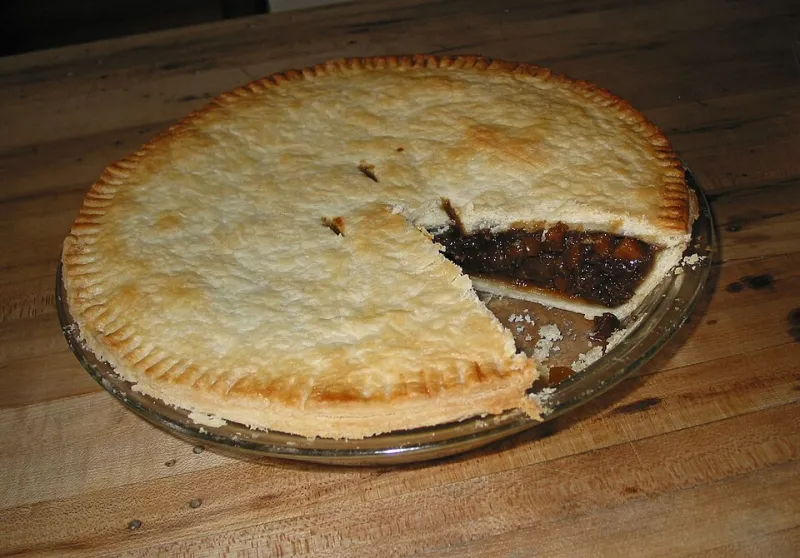
Photo: Alcinoe, Public domain, via Wikimedia Commons
Stir-Up Sunday falls this year on 22 November, the last Sunday before Advent. It is not a date the calendar prints in red. No bank holiday attends it, no window display announces it, and yet for a great many households in this town it is the fixed point from which Christmas properly begins.
At Brookshaws & Sons we have weighed out the ingredients for it for more than a century, and we have noticed something about the customers who come in for them: they rarely ask about quantities. What they want is confirmation. They want to be told that the bag of currants they have bought every year since their mother's time is the right one, and that they are not, this year, too late.
Where the Name Comes From
The name is older than the pudding. The collect for the fourth Sunday before Christmas, in the Book of Common Prayer, begins with the words Stir up, we beseech thee, O Lord, the wills of thy faithful people. Victorian households, hearing that phrase read from the pulpit, took it as licence to gather in the kitchen and stir the Christmas pudding, and the habit stuck so firmly that it outlasted the prayer it came from.
The pudding itself arrived by a longer route. Medieval plum pottage was a savoury affair of beef, broth and dried fruit; by the eighteenth century it had shed its meat and much of its broth; by the nineteenth it had settled into the form we would recognise, boiled in a cloth or a basin, darkened with muscovado, and given weeks to mature before the day. What we are making, in other words, is a recipe edited by every generation that has cooked it — and it will be edited again.
What to Buy, and What to Look For
Dried fruit is the heart of the business, and dried fruit is not all alike.
Currants should be small, dark and faintly dull. If they shine and rattle they have been dried hard to sit on a shelf; if they are soft to the point of dampness they will ferment in the basin. Vostizza currants from Greece are the ones we keep back for puddings, and the difference is worth the pennies.
Sultanas and raisins should give slightly when pressed between finger and thumb, not crack. Smell the bag before you commit to it. The fruit should smell of fruit and nothing else; a faint whiff of paraffin is a bad sign, and a smell of nothing at all is a worse one. Mixed peel is better bought whole and chopped at home than bought ready-cut, though we will not pretend we always take our own advice on a busy Saturday.
Suet deserves a word. Proper beef suet, bought from the block and grated at home with a little flour to stop it clumping, gives the crumb its particular lightness. Vegetarian suet works perfectly well and many of our regulars prefer it; what we would counsel against is the pale, hard block that has sat in a warm cupboard since last winter.
Spices should be ground as close to the day as you can manage. Nutmeg, in particular, loses its nerve within weeks of being grated. Cinnamon, ginger, cloves, a little allspice if you like — the balance is a matter of family taste, and no two families in this town agree.
The Weighing
For a two-pound pudding, which serves eight generously, we would suggest the following: 250g each of currants, sultanas and raisins; 100g of chopped mixed peel; 100g of ground almonds; 100g of fresh breadcrumbs from yesterday's loaf; 100g of plain flour; 175g of suet; 175g of dark muscovado; a level teaspoon each of cinnamon, ginger and mixed spice; the grated zest of a lemon and an orange; two eggs; a pinch of salt; and roughly 150ml of stout, ale or milk to bring it together, added cautiously.
We will weigh any of this for you, and we will not mind if you change your mind halfway down the list. Bring your own basin if you have one you are fond of; we keep a small stock for those who do not.
The Stirring
The stirring is not superstition so much as choreography. Everyone in the household takes a turn, clockwise, from east to west, and makes a wish while doing so — the wish kept silent, which is the whole point of it. The youngest present stirs first in many families; the eldest in others. A coin is sometimes dropped in, wrapped in greaseproof, though we would gently note that a sixpence is not what it was and a thimbleful of luck can be had less riskily.
What matters is that it is done together, and that it takes longer than it needs to.
Steaming, Storing, Waiting
Cover the basin with greaseproof and then foil, pleated down the middle to allow for swelling, and tie it securely with string. Steam for six hours, topping up the pan with boiling water as it goes and never letting it boil dry. Cool, re-cover, and store somewhere cold and dark — a larder, an unheated room, a garage shelf away from the car.
Once a fortnight, a spoonful of brandy or ale poured over the top will keep it generous. On the day itself, steam for a further two hours and turn out. Serve with something cold and something sweet, and do not apologise for the brandy butter.
Small Puddings and Single Households
Not everyone has a family of eight to feed, and not everyone wants one. We have long encouraged customers to make two or three small puddings in half-pound basins rather than one large one. They steam in less time, they keep beautifully, they make an excellent gift for a neighbour, and a person living alone can have pudding on the day without committing to a fortnight of it afterwards.
If you know someone who will be on their own this Christmas, a small pudding left on the step in early December is a kindness that costs very little and is remembered for years.
A Card, Freely Given
The recipe above is printed on a card at the counter, and you are welcome to take one whether you buy anything or not. It is not the only way to make a pudding. It is the way we make one. Should your grandmother's method differ — and it will — hers is the better recipe, and we would be glad to hear it.