Built by Hand, Carried Home: The Quiet Craft of Packing a Bag Properly
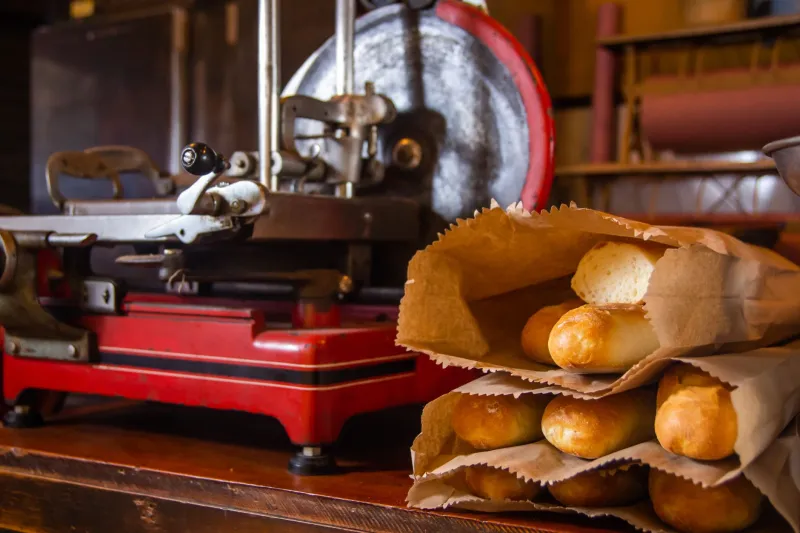
There is a moment at the end of every transaction on our shop floor that most retailers have quietly abolished, and we rather suspect they were wrong to. It is the moment when the goods leave the till and become a bag — when a basket of loose items is turned, by hand, into something that can survive the walk up Bank Street without a single cracked egg.
We have packed bags on this site since before the last war, and we have no intention of stopping.
A Skill Nobody Thinks to Teach
Ask a new member of staff what they imagined the job would involve and they will rarely say packing. Yet within a fortnight of starting, they are learning it — properly, the way the older hands teach it, with commentary and correction.
The rules are simple to state and years to master. Nothing heavy beneath anything soft. Bread goes last, always upright, never on its side. Tins form the foundation, arranged flat so they don't roll. Loose mushrooms and tomatoes get their own paper bag first, because a punnet is a promise the supermarkets have long since broken. Eggs travel at the top, nestled against whatever has the gentlest edges — a wrapped loaf, a bag of flour, never against the tin of golden syrup that has been escaping quietly since 1987.
Then there is judgement. The elderly gentleman who walks home the long, flat way by the river can carry more than the young mother with a toddler on one hip and a pushchair to steer. Two bags, evenly weighted, beat one bag that cuts off the circulation before the war memorial. A regular who has mentioned a poorly knee gets lighter bags than usual, and nobody makes a fuss about it.
None of this appears on a training manual. It passes from hand to hand, the way the recipes in our bakery do.
What the Machine Sees, and What It Doesn't
We understand the appeal of the self-checkout. It is fast, it is consistent, and at half past five on a wet Thursday it moves a queue along. We are not sentimental about efficiency; a firm that has traded since 1892 has survived precisely by knowing which old habits to keep and which to let go.
But consider what the machine actually does. It identifies items. It totals them. It asks you to place everything in the bagging area — a plastic coffin into which your shopping is deposited in whatever order it happened to fall off the scanner, with no thought for what travels next to what or who is carrying it where.
And consider what the machine does not do. It does not notice that Mrs Ellison has bought sherry, sponge fingers and trifle sponges, and that this is the first proper shopping she has done since her husband passed in the spring — and that a quiet word and a heavier hand with the free bag is called for. It does not spot that the young couple buying the roasting tin, the flour and the good butter are setting up home for the first time and deserve five minutes on oven temperatures. It cannot weigh a bag for the person holding it, only for the barcode.
The two minutes at the counter are not dead time. They are where the relationship lives.
The Bag as a Record
A hand-packed bag is, in its small way, a record of attention. When our staff pack by hand, they touch every item a customer has chosen. They notice when the usual oats are replaced by something sweeter. They see the extra bottle of wine and can ask whether it's a celebration, or simply stay quiet and add a corkscrew to the top of the bag, which is often the better answer.
Over months and years, this becomes something no loyalty card can replicate: a working knowledge of a household, updated weekly, held by a person who will still be behind the same counter next year.
Efficiency Isn't the Only Measure
We do not pretend that hand-packing is quicker. It isn't. We do not pretend it is cheaper. It is not.
But a shopping trip is not merely the transfer of goods. It is a small weekly ceremony, and the packing of the bag is its final act — the moment the transaction becomes a kindness. When you arrive home, set the bag on the table and find that everything has arrived exactly as it should, bread unblemished and eggs intact, someone was thinking about you for two minutes without ever meeting your eyes.
We think that is worth the payroll. Our customers, we find, agree.