The Garden Never Lies: Notes From Thirty Years of Walking Buyers Round the Back
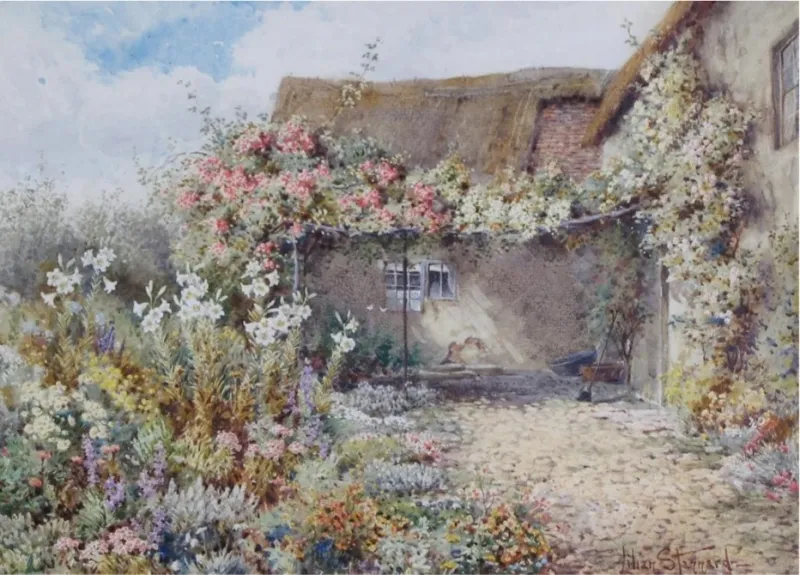
Photo: Lilian Stannard, Public domain, via Wikimedia Commons
There is a moment in every viewing that we at Brookshaws have come to recognise. The buyer has been shown the kitchen, admired the extension, nodded politely at the integrated appliances. Then they slip past the French doors and disappear into the garden for a minute or two on their own. When they come back, their mind is very often made up — and they haven't said a word about it.
We have been conducting viewings in this town since before the Great War, and if there is one lesson those decades have taught us, it is this: the garden tells the truth. The house can be dressed, staged, and photographed at the flattering hour of a June evening. The garden cannot lie, because a garden is simply the record of a thousand small decisions made over many seasons. You cannot fake a well-tended border any more than you can fake a good reputation.
Why the Back Garden Decides the Sale
Estate agents are often accused of selling kitchens. In our experience, we sell gardens with a house attached. The English buyer — particularly the one moving out of a flat and into their first patch of soil — is buying an idea of themselves: someone who will pot on the tomatoes, sit out with a cup of tea, know the names of the bees. Whether they ever do these things is beside the point. The garden must allow them to believe it.
And so, over the years, our valuers have developed something of an unofficial checklist. Not for the buyer's benefit, particularly — they will spot these things themselves — but to understand what kind of sale we are dealing with, and what kind of seller.
The Tell-Tale Signs, and What Each One Reveals
Whether the roses are labelled. A rose with a plastic tag at its base — 'Gertrude Jekyll', 'Mortimer Sackler' — tells you the gardener plans in years, not weekends. These sellers know their drainage and their frost pockets. They will also, in our experience, know where the stopcock is and when the boiler was last serviced.
The state of the shed. A shed with a swept floor, a window cleaned at least once in living memory and tools hanging in a row suggests a household where maintenance is a habit rather than a crisis. A shed full of flattened boxes and a rusted mower suggests a seller counting the days until completion.
The lawn edge. Ask any seasoned viewer: it is not the grass that matters but the cut along the path. Crisp edging speaks of pride; a straggly fringe of couch grass creeping over the slabs speaks of a long goodbye.
The compost heap. A proper heap, turned and layered, marks a serious gardener. A plastic 'dalek' bought and abandoned marks a hopeful one. Neither is a fault — but it helps us know how to talk about the garden honestly.
Bulbs planted in autumn. Daffodils and alliums coming up in spring mean the seller intends the garden to have a future they will partly not see. There is a quiet generosity in that, and buyers feel it even if they cannot name it.
The seating position. Where the bench or the table sits tells you the seller's favourite hour of the day — evening sun, shelter from the wind, a view back at the house. Buyers instinctively try the seat. If they linger, you may well have your sale.
The Border as a Barometer
None of this appears on a floorplan, which is precisely why it matters. A floorplan is a matter of fact; a garden is a matter of care, and care — or its absence — colours how a buyer feels about every other room in the house. A tired border casts a shadow over a renovated kitchen. A glorious one forgives a great deal of dated carpet.
Our advice to sellers is therefore unfashionably simple: do not spend the last fortnight on the house, spend it on the garden. Weed the path, edge the lawn, tie in the climber, and if you have labelled your roses, leave the labels where they are. Buyers will notice, even if they never mention it — and what they notice in the back garden is very often what they write the cheque for.
The house, in the end, is somewhere to live. The garden is somewhere to belong. After five generations of walking buyers round the back, we can confirm that it is the belonging they come for.