When the Van Won't Start and the Snow Won't Stop: Christmas Deliveries the Brookshaws Way
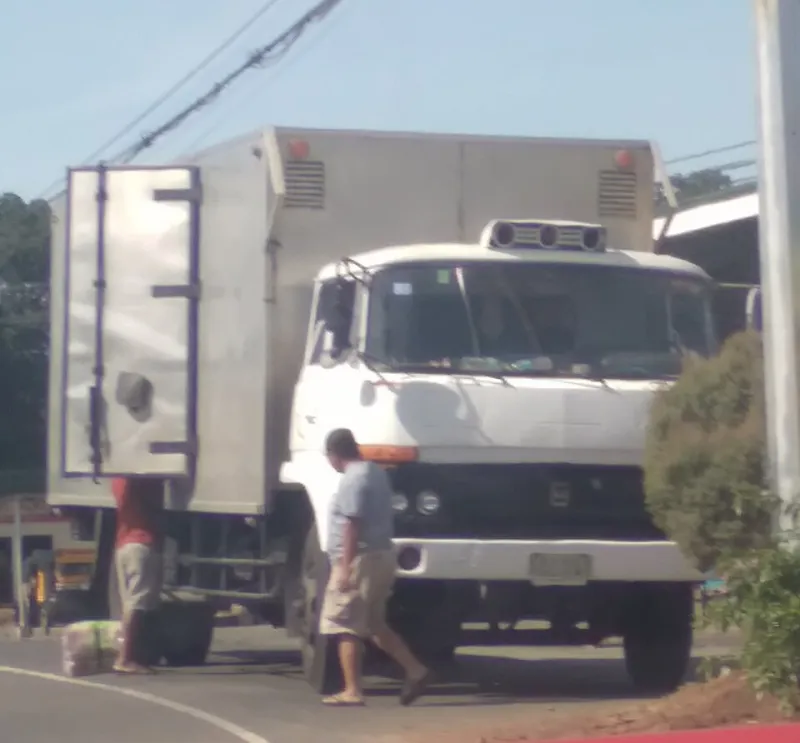
Photo: Commercial spotter63, CC BY 4.0, via Wikimedia Commons
There is a photograph in our back office, brittle at the corners, that shows a horse called Duke standing outside the shop in December 1934. His harness is rimed with frost. The cart behind him is stacked with wicker hampers, each one labelled in the same careful hand you will still see on our delivery notes today. The caption, written by my grandfather, reads simply: Round completed. Roads shut. Duke did not mind.
Ninety years on, Duke has been replaced — first by an Austin, then a succession of trusty Transits, and now by a single electric van that hums rather than rattles. But the promise has not changed. In the week before Christmas, whatever the weather decides to do, the parcels go out.
The Week Everything Gets Harder
Ask anyone who has worked a Christmas week in a family shop and they will tell you the same thing: it is not the volume that tests you, it is the conditions. The orders double, certainly, but so do the obstacles. Delivery slots that take twenty minutes in June can take two hours in a hard frost. Lane that were passable on Monday become rivers by Thursday.
And yet it is precisely this week — the week when our customers are most stretched, most tired, most in need of one less thing to worry about — that the delivery round matters most.
Margaret Hobson, who served behind our counter for thirty-one years before her retirement, puts it plainly. "Anyone can deliver in fair weather. The point of a proper round is that nobody has to ask whether it'll arrive. It arrives. That's the whole arrangement."
Snow, Floods and One Dark Tuesday
The stories accumulate like snowdrifts. There was the winter of 1963, when Frank Brookshaw walked the final half-mile to Hill Top Farm on foot, a hamper roped to a sledge borrowed from the butcher's boy, because the lanes had been impassable for four days. The farmers, the family records note, were "reduced to tinned ham and gratitude."
There was the flood of 2000, when the river took the ford and half the low road with it, and deliveries to the cottages on the far bank were completed by rowing boat — an arrangement made, we are told, with a fisherman named Mr Kelsall who accepted payment in sherry.
And then there was the power cut of December 2011. On the Tuesday before Christmas, a substation fault plunged the eastern half of the town into darkness for the best part of a day. The shop, thankfully, had light. It also had a fully charged van and a list of elderly customers who lived alone. By six o'clock that evening, we had delivered thermoses of soup, batteries, candles and, in one memorable case, a Christmas pudding to a house on Chapel Row where the resident — a Mrs Aldridge, then ninety-two — reportedly greeted the driver with the words, "I knew you'd come. You always do."
Of all the things written about this firm over the decades, that sentence is the one we are proudest of.
From Hooves to a Hum
We will admit, with affection, that the electric van took some getting used to. The older hands complained it was "too quiet" — that a delivery van ought to announce itself. But there are compensations. It starts on the coldest morning without complaint. It carries the same load as the old Transit. And on the narrow lanes up towards the moors, where a stalled engine once meant a long walk for petrol, the silence has its own charm.
What has not changed is the method. Every address is still written by hand on the delivery note. Every hamper is still packed to order, not off a shelf — the sloe gin for one household, the salt beef for another, the marmalade that a family in the next village has ordered every Christmas since 1978. The driver still knocks rather than beeping, still waits rather than leaving it on the step, still comes in for the cup of tea if it is offered. Often it is offered. Often it would be rude not to.
What Service Actually Means
We are a formal firm by habit and by inclination, so forgive us if this next part sounds like a sermon. It is not meant to.
But somewhere along the way, the word service came to mean a time slot and a tracking number. We have nothing against either. But the tradition we inherited means something older: that a delivery is not a transaction concluded but a relationship maintained. That the parcel is the small part, and the knock on the door is the large one. That in the darkest, busiest week of the year, a familiar face at the door with a hamper and a few minutes' chat is worth more than any discount.
Duke would not have understood a tracking number. He would, we think, have understood Mrs Aldridge on Chapel Row, waiting by a cold hearth, certain that the van would come.
It always does. That is the whole arrangement.
If you would like a hamper delivered this Christmas — by road, by lane, or in extremity by boat — do give us a ring or call in. The list fills quickly, and the weather, as ever, makes its own plans. But the round will be completed. It always is.