What the Cellar Remembers: Notes on the Rooms That Never Make the Brochure
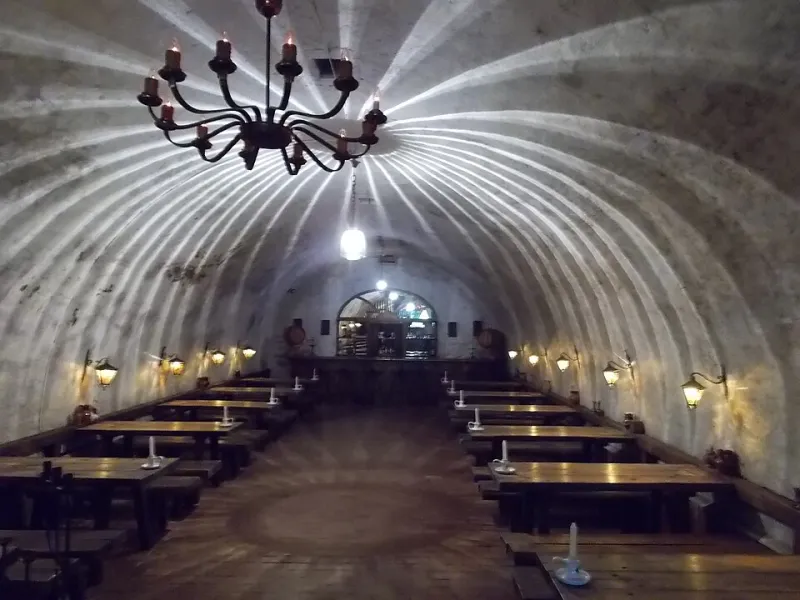
Photo: Globetrotter19, CC BY-SA 3.0, via Wikimedia Commons
There is a rule, unwritten but universally observed, that no brochure photograph has ever featured a cellar hatch. Nor an attic ladder, nor the cupboard under the stairs with its coat hooks and its smell of shoe polish. The rooms that sell houses are the ones with light in them. The rooms that tell houses are quite different, and after five generations of valuing property in this town, we have learned to spend as much time below the floorboards as above them.
The Cellar: A Century of Storage and Silence
The cellars of this part of the world were rarely built for romance. They were built for beer, coal and, in the case of one Victoria Terrace property we handled in the 1980s, a very fine collection of preserved plums that outlasted the lady who bottled them. A cellar that stays dry through a wet February is worth more than any amount of stylish tiling upstairs — and a cellar that doesn't will tell you long before the surveyor does.
Look, when you view, for the tidemarks on the walls: a faint brown line an inch above the floor is history; a foot of flaking plaster is a conversation you need to have with a specialist. Smell matters too. A dry cellar smells of cold stone and old paper. A damp one smells of mushrooms and regret.
The Attic: Where Families File Themselves Away
An attic is a family's autobiography, filed chronologically and never read again. Prams that carried three generations, suitcases with hotel labels from Llandudno, the Christmas decorations that only come down when someone finally moves house. We once cleared a loft in which we found, neatly tied in bundles, every newspaper from the week the Coronation — the vendor's mother had meant to make a scrapbook for seventy years.
For the practical-minded, the attic also holds the answers to questions buyers should ask. Is there insulation, and is it laid properly rather than crammed into the eaves like an afterthought? Are the rafters sound? Has anyone been up there recently, or only the squirrels? A well-insulated, well-ventilated loft can shave a meaningful figure off the heating bills, which is a far better inheritance than another box of crockery.
The Cupboard Under the Stairs: Small Room, Long Memory
Every British house of a certain age has one, and every one of them is the same room. Bicycle pump, tin of assorted screws, the ironing board that never goes back in properly, and — in the houses we have sold — the occasional document of genuine importance: deeds, war medals, a ration book kept 'just in case'.
It is also, quietly, one of the most useful spaces in the home. Buyers overlook it; sellers should not. A boarded floor, a light and a proper door turns it from a dumping ground into genuine storage, and in a market where space is the scarcest commodity, that matters. We have watched buyers fall for a house because of a kitchen extension, and we have watched them choose one because the under-stairs cupboard had a light and a shelf.
What It Means for Value
When we value a property, we take the forgotten rooms into account in both directions. A dry, ventilated cellar with headroom adds real worth. A loft that could be converted — subject, always, to the usual consents — adds more. And a house whose hidden rooms are sound is nearly always a house whose visible rooms have been looked after too. Families who mind the parts nobody sees tend to mind the parts everybody does.
So when you next view a property, do the polite thing in the rooms with the light. Then lift the hatch, open the cupboard door and take an honest look at the rest. The house is keeping its records down there. It is only courteous to read them.